Neill Blomkamp’s 2013 science-fiction film
Elysium, starring
Matt Damon and Jodie Foster, takes place in Los Angeles, circa 2154.
The wealthy have moved into an orbiting luxury satellite — the Elysium
of the title — while the wretched majority of humans remain in squalor
on Earth. The film works passably as an allegory for its director’s
native South Africa, where racial apartheid was enforced for nearly 50
years, but it’s a rather cartoonish vision of the American future. Some
critics panned the film for pushing a socialist message. Elysium’s
dystopian world, however, is a near-perfect metaphor for an actually
existing socialist nation just 90 miles from Florida.
I’ve always wanted to visit Cuba — not because I’m nostalgic for a
botched utopian fantasy, but because I wanted to experience Communism
firsthand. When I finally got my chance several months ago, I was
startled to discover how much the Cuban reality lines up with Blomkamp’s
dystopia. In Cuba, as in Elysium, a small group of economic and
political elites live in a rarefied world high above the impoverished
masses. Many tourists return home convinced that the Cuban model
succeeds where the Soviet model failed. But that’s because they never
left Cuba’s Elysium.
I had to lie to get into the country. Customs and immigration
officials at Havana’s tiny, dreary José Martí International Airport
would have evicted me had they known I was a journalist. But not even a
total-surveillance police state can keep track of everything and
everyone all the time, so I slipped through. It felt like a victory.
Havana, the capital, is clean and safe, but there’s nothing to buy.
It feels less natural and organic than any city I’ve ever visited.
Initially, I found Havana pleasant, partly because I wasn’t supposed to
be there and partly because I felt as though I had journeyed backward in
time. But the city wasn’t pleasant for long, and it certainly isn’t
pleasant for the people living there. It hasn’t been so for decades.
Outside its small tourist sector, the rest of the city looks as
though it suffered a catastrophe on the scale of Hurricane Katrina or
the Indonesian tsunami. Roofs have collapsed. Walls are splitting apart.
Window glass is missing. Paint has long vanished. It’s eerily dark at
night, almost entirely free of automobile traffic. I walked for miles
through an enormous swath of destruction without seeing a single
tourist. Most foreigners don’t know that this other Havana exists,
though it makes up most of the city — tourist buses avoid it, as do
taxis arriving from the airport. It is filled with people struggling to
eke out a life in the ruins.
Marxists have ruled Cuba for more than a half-century now. The
revolutionaries promised liberal democracy, but Castro secured absolute
power and flattened the country with a Marxist-Leninist battering ram.
The objectives were total equality and the abolition of money; the
methods were total surveillance and political prisons. The state slogan,
then and now, is “socialism or death.”
Cuba was one of the world’s richest countries before Castro destroyed
it — and the wealth wasn’t just in the hands of a tiny elite. “Contrary
to the myth spread by the revolution,” wrote Alfred Cuzan, a professor
of political science at the University of West Florida, “Cuba’s wealth
before 1959 was not the purview of a privileged few … Cuban society was
as much of a middle-class society as Argentina and Chile.”
“More Cubans vacationed in the U.S. in 1955 than Americans vacationed
in Cuba. Americans considered Cuba a tourist playground, but even more
Cubans considered the U.S. a tourist playground,” Cuban exile Humberto
Fontova, author of a series of books about Castro and Guevara, tells me.
Havana was home to a lot of that prosperity, as is evident in the
extraordinary classical European architecture that still fills the city.
Poor nations do not — cannot — build such grand or elegant cities.
Communism destroyed Cuba’s prosperity,
but the country experienced unprecedented pain and deprivation when
Moscow cut off its subsidies
But rather than raise the poor up, Castro and Guevara shoved the rich
and the middle class down. The result was collapse. “Between 1960 and
1976,” Cuzan says, “Cuba’s per capita GNP in constant dollars declined
at an average annual rate of almost half a percent. The country thus has
the tragic distinction of being the only one in Latin America to have
experienced a drop in living standards over the period.”
Communism destroyed Cuba’s prosperity, but the country experienced
unprecedented pain and deprivation when Moscow cut off its subsidies
after the fall of the Soviet Union. Journalist and longtime Cuba
resident Mark Frank writes vividly about this period in his book
Cuban Revelations. He quotes a nurse who tells him that Cubans “used to make hamburgers out of grapefruit rinds and banana peels.”
By the 1990s, Cuba needed economic reform as much as a gunshot victim
needs an ambulance. Castro wasn’t about to reform himself and his
ideology out of existence, but he had to open up at least a small piece
of the country to the global economy. So the Soviet subsidy was replaced
by vacationers, mostly from Europe and Latin America, who brought in
much-needed hard currency. Arriving foreigners weren’t going to tolerate
receiving ration cards for food — as the locals do — so the island also
needed some restaurants. The regime thus allowed
paladars —
restaurants inside private homes — to open, though no one from outside
the family could work in them. (That would be “exploitative.”)
Around the same time, government-run “dollar stores” began selling
imported and relatively luxurious goods to non-Cubans. Thus was Cuba’s
quasi-capitalist bubble created.
When the ailing Fidel Castro ceded power to his less doctrinaire
younger brother Raúl in 2008, the quasi-capitalist bubble expanded, but
the economy remains heavily socialist. In the United States, we have a
minimum wage; Cuba has a maximum wage — $20 a month for almost every job
in the country. (Professionals such as doctors and lawyers can make a
whopping $10 extra a month.) Sure, Cubans get “free” health care and
education, but as Cuban exile and Yale historian Carlos Eire says, “All
slave owners need to keep their slaves healthy and ensure that they have
the skills to perform their tasks.”
Even employees inside the quasi-capitalist bubble don’t get paid
more. The government contracts with Spanish companies such as Meliá
International to manage Havana’s hotels. Before accepting its contract,
Meliá said that it wanted to pay workers a decent wage. The Cuban
government said fine, so the company pays $8–$10 an hour. But Meliá
doesn’t pay its employees directly. Instead, the firm gives the
compensation to the government, which then pays the workers — but only
after pocketing most of the money. I asked several Cubans in my hotel if
that arrangement is really true. All confirmed that it is. The workers
don’t get $8–$10 an hour; they get 67 cents a day — a child’s allowance.
A one-way ticket to the other side of the island costs several months’ pay; a round-trip costs almost an annual salary
The maximum wage is just the beginning. Not only are most Cubans not allowed to have money; they’re hardly allowed to have
things.
The police expend extraordinary manpower ensuring that everyone
required to live miserably at the bottom actually does live miserably at
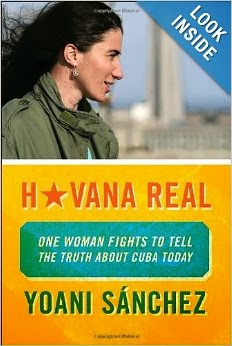
the bottom. Dissident blogger and author Yoani Sánchez describes the
harassment sarcastically in her book
Havana Real: “Buses are
stopped in the middle of the street and bags inspected to see if we are
carrying some cheese, a lobster, or some dangerous shrimp hidden among
our personal belongings.”
Perhaps the saddest symptom of Cuba’s state-enforced poverty is the
prostitution epidemic — a problem the government officially denies and
even forbids foreign journalists based in Havana to mention. Some Cuban
prostitutes are professionals, but many are average women — wives,
girlfriends, sisters, mothers — who solicit johns once or twice a year
for a little extra money to make ends meet.
A one-way ticket to the other side of the island costs several
months’ pay; a round-trip costs almost an annual salary. As for the free
health care, patients have to bring their own medicine, their own
bedsheets, and even their own iodine to the hospital. Most of these
items are available only on the illegal black market, moreover, and must
be paid for in hard currency — and sometimes they’re not available at
all. Cuba has sent so many doctors abroad — especially to Venezuela, in
exchange for oil — that the island is now facing a personnel shortage.
Housing is free, too, but so what? Americans can get houses in
abandoned parts of Detroit for only $500 — which makes them practically
free — but no one wants to live in a crumbling house in a
gone-to-the-weeds neighborhood. I saw adequate housing in the Cuban
countryside, but almost everyone in Havana lives in a Detroit-style
wreck, with caved-in roofs, peeling paint, and doors hanging on their
hinges at odd angles.
Cuba is short of everything but air and sunshine. In her book,
Sánchez describes an astonishing appearance by Raúl Castro on
television, during which he boasted that the economy was doing so well
now that everyone could drink milk. And yet Raúl’s promise of milk for
all was deleted from the transcription of the speech in
Granma, the Communist Party newspaper. He went too far: there was not enough milk to ensure that everyone got some.
Cuba has two economies now: the national Communist economy for the
majority; and a quasi-capitalist one for foreigners and the elite. Each
has its own currency: the Communist economy uses the Cuban peso, and the
capitalist bubble uses the convertible peso. Cuban pesos are worth
nothing. They can’t be converted to dollars or euros. Foreigners can’t
even spend them in Cuba. The convertible pesos are pegged to the U.S.
dollar, but banks and hotels pay only 87 Cuban cents for each one — the
government takes 13 percent off the top. The rigged exchange rate is an
easy way to shake down foreigners without most noticing. It also enables
the state to drain Cuban exiles.
Castro created the convertible peso mainly to seal off Cuba’s little
capitalist bubble from the ragged majority in the Communist economy.
Until a few years ago, ordinary Cubans weren’t allowed even to set foot
inside hotels or restaurants unless they worked there, lest they find
themselves exposed to the seductive lifestyles of the decadent
bourgeoisie from capitalist nations. A few years ago, the government
stopped physically blocking Cubans from hotels and restaurants, partly
because Raúl is a little more relaxed about these things than Fidel but
also because most Cubans can’t afford to go to these places, anyway.
A single restaurant meal in Havana costs an entire month’s salary.
One night in a hotel costs five months’ salary. A middle-class tourist
from abroad can easily spend more in one day than most Cubans make in a
year. I had dinner with four Americans at one of the paladars. The only
Cubans in the restaurant were the cooks and the waiters. The bill for
the five of us came to about $100. That’s five months’ salary.
I ate alone. Every other table was empty. The staff waited on me as if I were the president of some faraway minor republic
Leftists often talk about “food deserts” in Western cities, where the
poor supposedly lack options to buy affordable and nutritious food. If
they want to see a real food desert, they should come to Havana. I went
to a grocery store across the street from the exclusive Meliá Cohiba
Hotel, where the lucky few with access to hard currency shop to
supplement their meager state rations. The store was in what passes for a
mall in Havana — a cluttered concrete box, shabby compared even with
malls I’ve visited in Iraq. It carried rice, beans, frozen chicken,
milk, bottled water, booze, a small bit of cheese, minuscule amounts of
rancid-looking meat, some low-end cookies and chips from Brazil — and
that’s it. No produce, cereal, no cans of soup, no pasta. A 7-11 has a
far better selection, and this is a place for Cuba’s “rich” to shop. (I
heard, but cannot confirm, that potatoes would not be available anywhere
in Cuba for another four months.)
An advertisement in my hotel claimed that the Sierra Maestra
restaurant on the top floor is “probably” the best in Havana. I had
saved the Sierra Maestra for my last night and rode the elevator up to
the 25th floor. I had my first and only steak on the island and washed
it down with Chilean red wine. The tiny bill set me back no more than
having a pizza delivered at home would, but the total nevertheless
exceeded an entire month’s local salary. Not surprisingly, I ate alone.
Every other table was empty. The staff waited on me as if I were the
president of some faraway minor republic.
I stared at the city below out the window as I sipped my red wine.
Havana looked like a glittering metropolis in the dark. Night washed
away the rot and the grime and revealed nothing but city lights. It
occurred to me that Havana will look mostly the same — at night, anyway —
after it is liberated from the tyrannical imbeciles who govern it now. I
tried to pretend that I was looking out on a Cuba that was already free
and that the tables around me were occupied — by local people, not
foreigners — but the fantasy faded fast.
I was all alone at the top of Cuba’s Elysium and yearning for home —
where capitalism’s inequalities are not so jagged and stark.
National Post
Michael J. Totten is a City Journal contributing editor
and the author of five books, including The Road to Fatima Gate. This
essay is a adapted from a longer article appearing in the Spring, 2014
edition of City Journal.
http://fullcomment.nationalpost.com/2014/06/06/michael-j-totten-an-eyewitness-account-of-cubas-shocking-wretchedness/